Business Waste Removal in Hendon

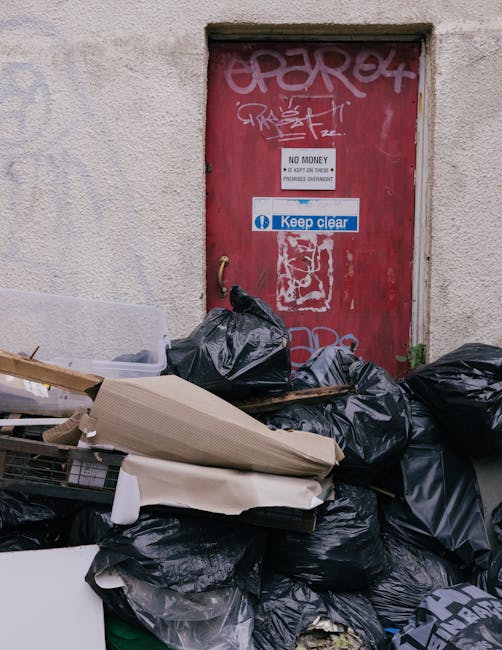
Business waste removal in Hendon should be straightforward, orderly and suited to the way your premises actually operate. We collect commercial waste from offices, shops, managed buildings and other working environments, helping you keep storage areas, workrooms and shared spaces clear without disrupting the day more than necessary. The focus is on practical removal of unwanted material, sensible separation where required and a service that supports routine business housekeeping rather than creating extra admin.
Our work covers a broad range of non-hazardous commercial waste streams, including general rubbish, mixed office waste, packaging, old furniture and other items that no longer have a useful place on site. Where suitable, materials are sorted for recycling and recovery so that disposal is handled carefully and with attention to the nature of the load. If you need to clear a single room, an awkward store area or several parts of a premises, we can tailor the collection to the waste already on site.
For a quotation, it helps to have a basic idea of the type and approximate volume of waste that needs removing, along with any access or parking considerations that may affect loading. You do not need to prepare a long description; a clear summary is usually enough to start the process. If you already know what must go and what should remain in place, that also makes planning easier. Start with the items that are causing the most pressure, then build the rest of the collection around them.
Commercial collections for offices and day-to-day operations
Office waste removal needs a clean, unobtrusive approach. Paper records, old equipment, broken chairs, redundant cabinets and mixed general rubbish can build up quickly in workspaces, meeting rooms, reception areas and back offices. We provide collections that are suitable for premises where tidiness and continuity matter, and we aim to remove waste in a way that leaves the remaining space usable. If needed, our crews can focus on the items that are taking up the most room first, then work through the rest of the load.
In many workplaces, the difficulty is not the waste itself but the way it is spread across several spots. A well-planned collection reduces handling later and avoids waste being moved around more than once. This is especially useful when old office furniture, archive boxes, packaging and mixed rubbish have accumulated together. If your premises have shared corridors, loading restrictions or limited lift access, those details are worth noting early so that the collection can be organised properly. Please request a quotation when you are ready.
Where office waste is only part of the job, it is often practical to combine it with other clearances from the same premises. You may want a broader waste removal service where several waste types need taking away, or a specific confidential shredding arrangement for paper that should be handled separately from general office rubbish. The right mix depends on what is present, how it is stored and whether different materials need to be separated before collection.
Furniture, fixtures and bulky item removal
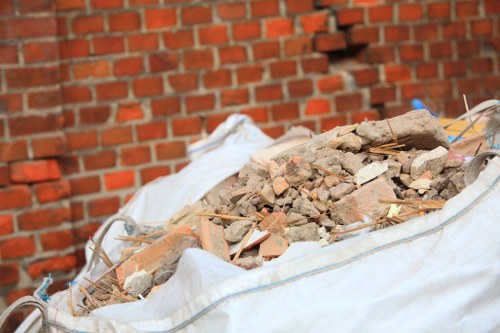
Commercial premises often need help with bulky items that are awkward to move through corridors, lifts or narrow doors. Desks, filing units, shelving, reception furniture and other large items can all be taken as part of a scheduled clearance. We remove furniture that is no longer required, no longer fit for purpose or simply occupying valuable room that could be put to better use. This kind of work is useful during reconfiguration, refurbishment or the steady reduction of unused stock and equipment.
Some items are easiest to deal with as a mixed load rather than as separate collections. For example, a single office room might contain seating, packaging, dismantled shelving and general rubbish that have all been left behind after a move or internal change. In those situations, the collection can be planned around what is on site rather than forcing you to sort everything into artificial categories. Clear access and accurate descriptions help us prepare for lifting, loading and disposal without delay.
If your waste includes larger domestic-style items from premises that also serve staff or visitors, the most relevant page may be our furniture clearance service, while mixed bulky household-style items can sometimes be handled through furniture disposal if that better matches the material. The distinction is mainly about what is being removed and how the load should be organised, not about creating extra work for you.
Shop, trade and premises clearance for mixed commercial waste
Business waste is not always neat, uniform or easy to categorise. Shops, small workshops, storage rooms and back-of-house areas may generate packaging, damaged display pieces, broken stock, offcuts and general rubbish in the same week. A mixed clearance allows these materials to be removed together when that is the most efficient option. We can handle collections that involve a combination of light waste and bulkier items, as long as the contents fall within the scope of a normal commercial removal.
When a site contains several different waste types, the useful decision is often whether to split them into separate collections or keep them together. That depends on how they are stored, whether anything needs extra care and how much time is available on the day. If the load includes items from a back room, a stock area and a customer-facing part of the premises, it may still be simpler to treat it as one clearance. Please tell us what is in scope so that the collection is arranged in a sensible way.
For premises with broader commercial waste to move, the main business waste removal page is the best fit. If the waste is a more general mix from a workplace, stockroom or premises with several areas, our waste removal service may be the more flexible option. When the job is tied to an office setting rather than a mixed commercial site, office clearance offers a more focused route.
Preparing a collection without overcomplicating it
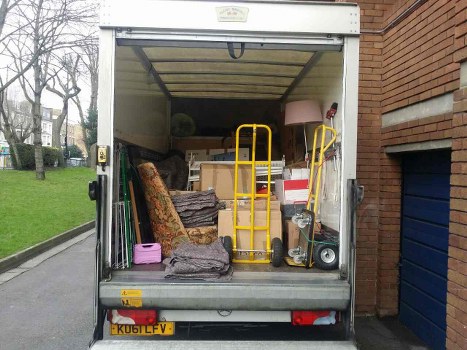
A good quotation usually starts with simple facts: what needs removing, roughly how much there is and whether the items are accessible. Photographs can be helpful if the waste is spread across several rooms or includes bulky pieces, but you do not need to stage the area first. The purpose is to show the load as it really is, so that planning is based on realistic conditions. If anything is fragile, awkwardly placed or fixed in position, that is worth mentioning separately.
There is no need to sort every item in advance unless you already know that certain materials should be separated. What matters most is that the collection plan reflects the actual site. In some jobs, waste is gathered from a single store cupboard; in others, it is spread across multiple floors or includes heavier objects that require a little more time. A short note about access, loading bays, time windows or security arrangements can also make the collection smoother. Accurate details save time later and reduce the chance of avoidable changes on the day.
If you are ready to move forward, you can make the enquiry now and ask for a quotation that matches the volume and type of waste involved. For standard business waste clearance, our pricing and quotes page is the most direct place to begin. If you prefer to arrange a visit or confirm a collection slot online, the book online page gives another straightforward route into the process.
Recycling, recovery and responsible disposal
Responsible commercial waste removal is not just about taking material away. It also involves deciding what can be sorted, what should be recovered and what must be disposed of in the appropriate way. Mixed loads often contain items that are suitable for recycling alongside waste that cannot be reused. By handling the collection with this in mind, the service supports better waste management without making the process more complicated for the customer.
Different materials call for different treatment. Cardboard, paper, some metal items, redundant office furniture and selected clean hard materials may be handled differently from mixed rubbish or broken items that cannot be recovered. The important point is that the collection is organised around the contents of the load rather than a one-size-fits-all approach. In a business environment, that can help keep compliance and site housekeeping aligned without adding unnecessary steps for staff.
For customers who want to understand how recovered material is handled alongside general disposal, the recycling and sustainability page explains the wider approach. If you also need to know what material is suitable for a skip or a similar container-based arrangement, the what can go in a skip page can be useful for comparison, even where a direct removal service is the better fit for your premises.
About Hendon
Hendon is a district in the London Borough of Barnet in north-west London, long associated with a blend of suburban housing, transport connections and older historic layers. The area developed from a rural Middlesex settlement into a more built-up urban district over time, and traces of that earlier pattern still appear in its street layout and surviving historic buildings. One of the best-known landmarks is Hendon Hall, a country house of the 18th century that reflects the area’s earlier estate history, while the parish church of St Mary’s on Church End Hill preserves a sense of the older village centre. The Brent Reservoir, also known as the Welsh Harp, lies to the west of Hendon and forms a prominent open-water feature shared with neighbouring districts; it is valued for wildlife, waterside walks and a strong sense of open space within the wider city fabric. Hendon is also notable for its transport links, especially Hendon railway station and nearby road connections that have shaped its growth and everyday movement. The area includes a mix of older residential streets, later housing, commercial premises and institutions, among them the site of the former Hendon Aerodrome, which played a significant role in early British aviation history. The district’s built environment therefore combines religious, domestic, transport and civic layers in a relatively compact part of north London, making it distinctive both in character and in the way it has evolved.
The locality’s architecture is varied, with late Georgian and Victorian survivals sitting alongside more modern development and retail frontages. Around Church End and the surrounding streets, visitors can still find reminders of the pre-urban village, while wider Hendon includes apartment blocks, shopping parades and institutional buildings associated with the growth of the capital in the 20th century. Green space also plays an important role, from smaller local parks to the larger open setting around the reservoir, giving the district a contrast between built density and quieter recreation areas. The result is a place with layered history, practical transport links and a clearly urban identity that still retains visible evidence of its earlier past.
Waste handled from premises and back-of-house areas
Business premises often produce waste in places that customers never see, such as stockrooms, staff areas, plant rooms and service corridors. These spaces can fill up with packaging, damaged materials, obsolete items and general rubbish that is easy to ignore until it starts taking space away from normal operations. Our service is designed to clear those areas efficiently so that the premises can return to a more workable state. That can be particularly helpful where waste has accumulated gradually rather than arriving in one large load.
In practice, the most useful approach is to remove the items that block access or occupy the most valuable floor space first. After that, smaller waste can be gathered and loaded in a controlled way. This avoids turning the clearance into a long sorting exercise and helps keep the remaining premises safe to use. If there are materials that require a different route, such as paper that should be shredded or equipment that needs particular handling, those items can be identified as part of the initial plan instead of being mixed with everything else.
You can keep the arrangement simple: tell us what is in the room, what is staying and what needs to go. If the site has a regular pattern of waste build-up, it may be useful to discuss a repeat collection schedule rather than treating every clearance as a one-off. When you are ready to compare options, the about us page gives background on the wider business, while the contact us page is the place to send a direct enquiry for a quotation.
Useful choices for different types of commercial waste

Different business settings require slightly different clearance choices, and the best result usually comes from matching the service to the waste rather than forcing the waste to fit a generic label. Some customers need a broad removal for a whole premises, while others want one room, one category of item or one awkward collection dealt with efficiently. The main task is to remove the waste in a way that suits the layout, the contents and the pace of the working environment.
When deciding what to request, it can help to think about the waste in practical groups rather than in broad generalities. For example: office materials, bulky furniture, mixed rubbish, stockroom waste, confidential papers and old appliances each call for a slightly different conversation. A clear description does not have to be long, but it should be specific enough to show what needs to be loaded. If you are unsure how to describe a particular item, a short explanation is usually enough for us to advise on the right route.
Useful service options include:
- general business waste removal for mixed commercial loads
- office clearance where desks, chairs and workplace rubbish need taking away
- furniture clearance for larger items that are no longer required
- confidential shredding for paper materials needing separate handling
- pricing and quotes when you want to compare the job before booking
Next steps for a quotation
If you need business waste removal in Hendon, the simplest next step is to outline the type of waste, the approximate amount and the access available on site. That is usually enough to begin shaping a quotation around your premises rather than around a generic estimate. Where the load includes mixed materials, it can also help to note whether any items are especially bulky, sensitive or stored in several locations. The more accurate the outline, the easier it is to match the collection to the work involved.
We keep the process practical and focused on the waste itself, so you are not asked to overprepare. In many cases, a short description and a few clear details are all that is needed to move the job forward. If you want to plan more than one clearance, or you think there may be repeat waste from your premises, mention that at the outset so the arrangement can be considered properly. Please request a quotation when you are ready to proceed.
The most direct final step is to send your details through the contact us page for a quotation. If you would rather review the broader service options first, you can revisit the main business waste removal page and choose the route that best fits your site and the material that needs taking away.